


Have an event on Eventbrite you want to switch over? Try our import tool.
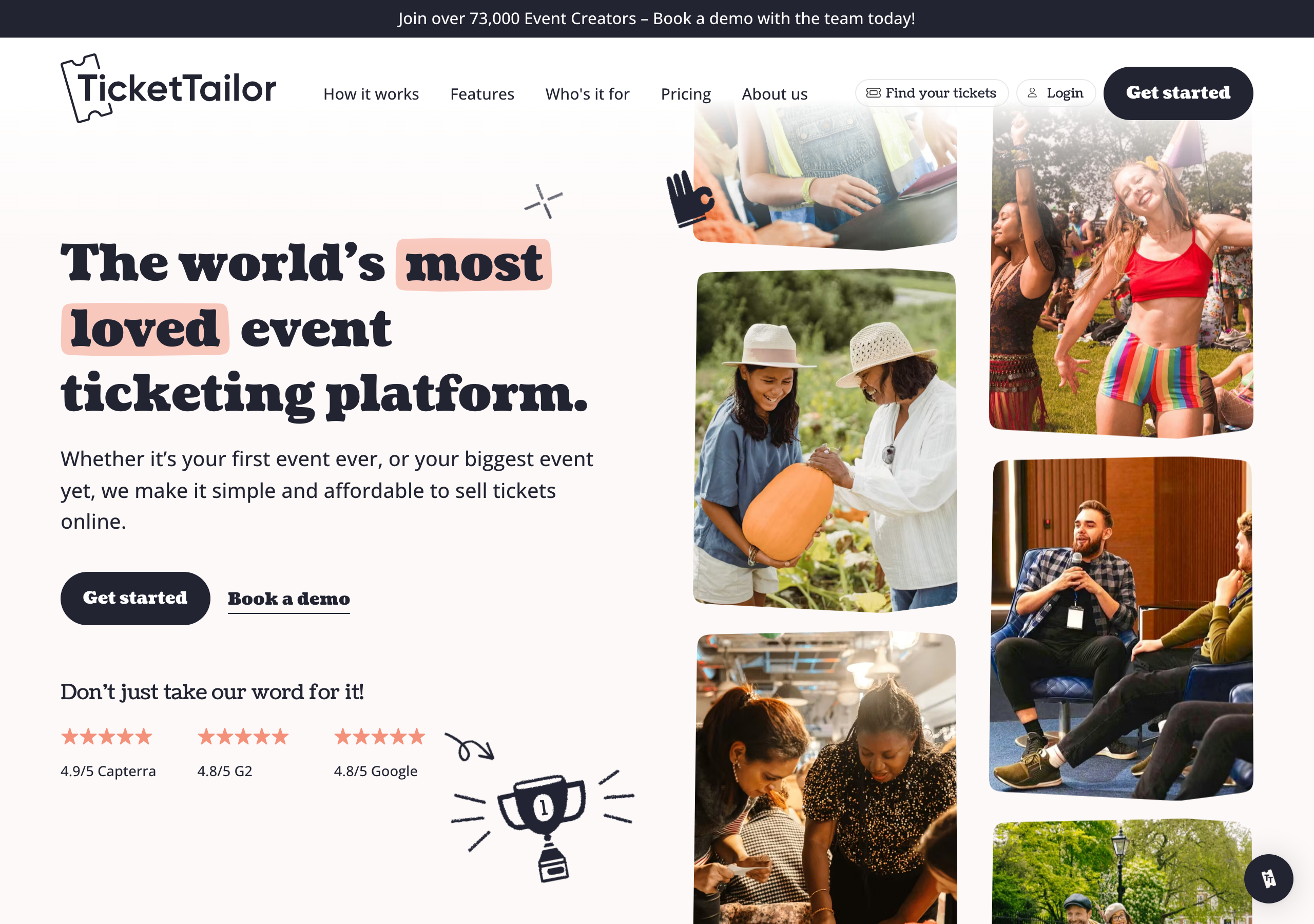
  • Ticket Tailor
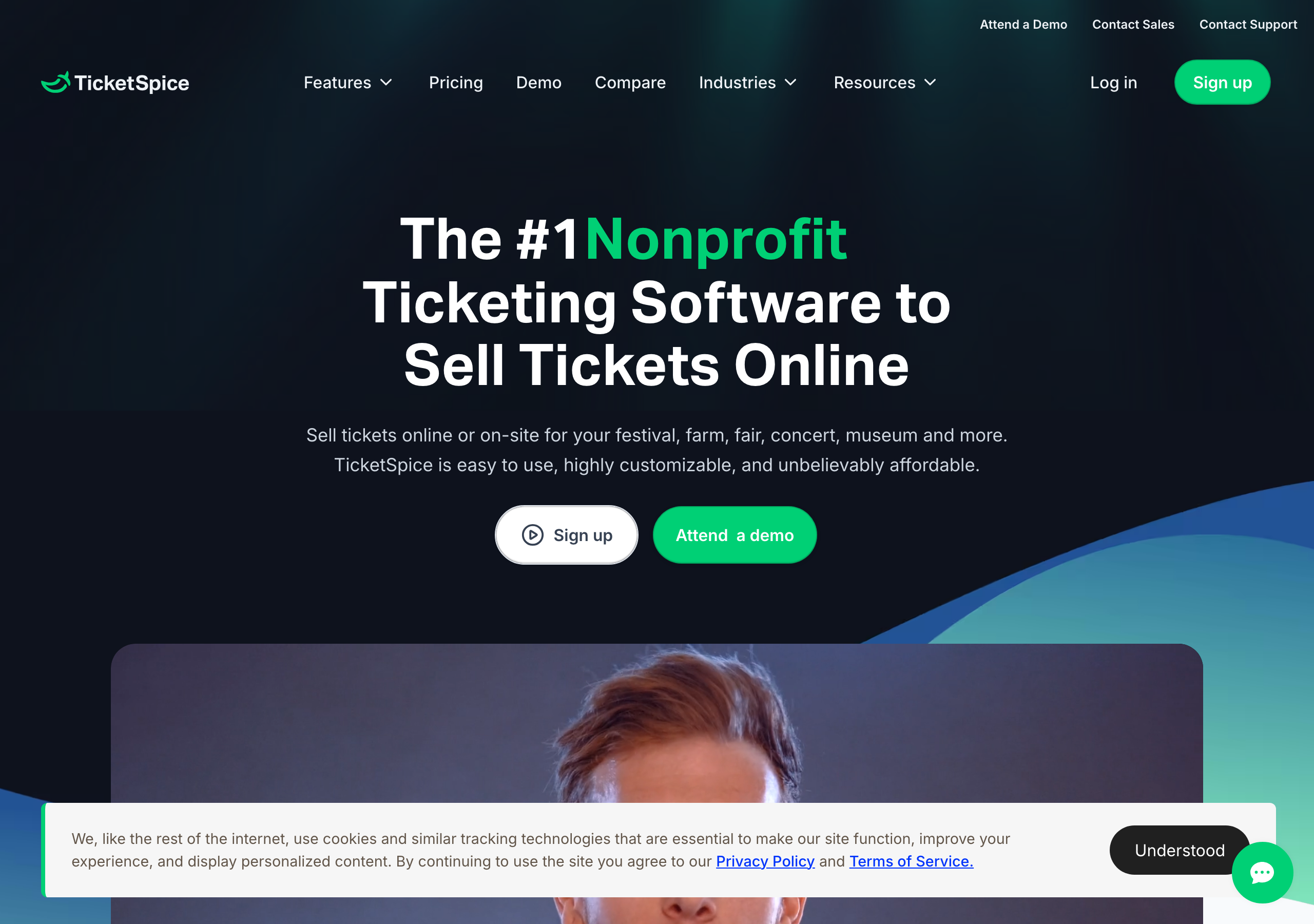
  • TicketSpice
  • TicketLeap
  • Luma
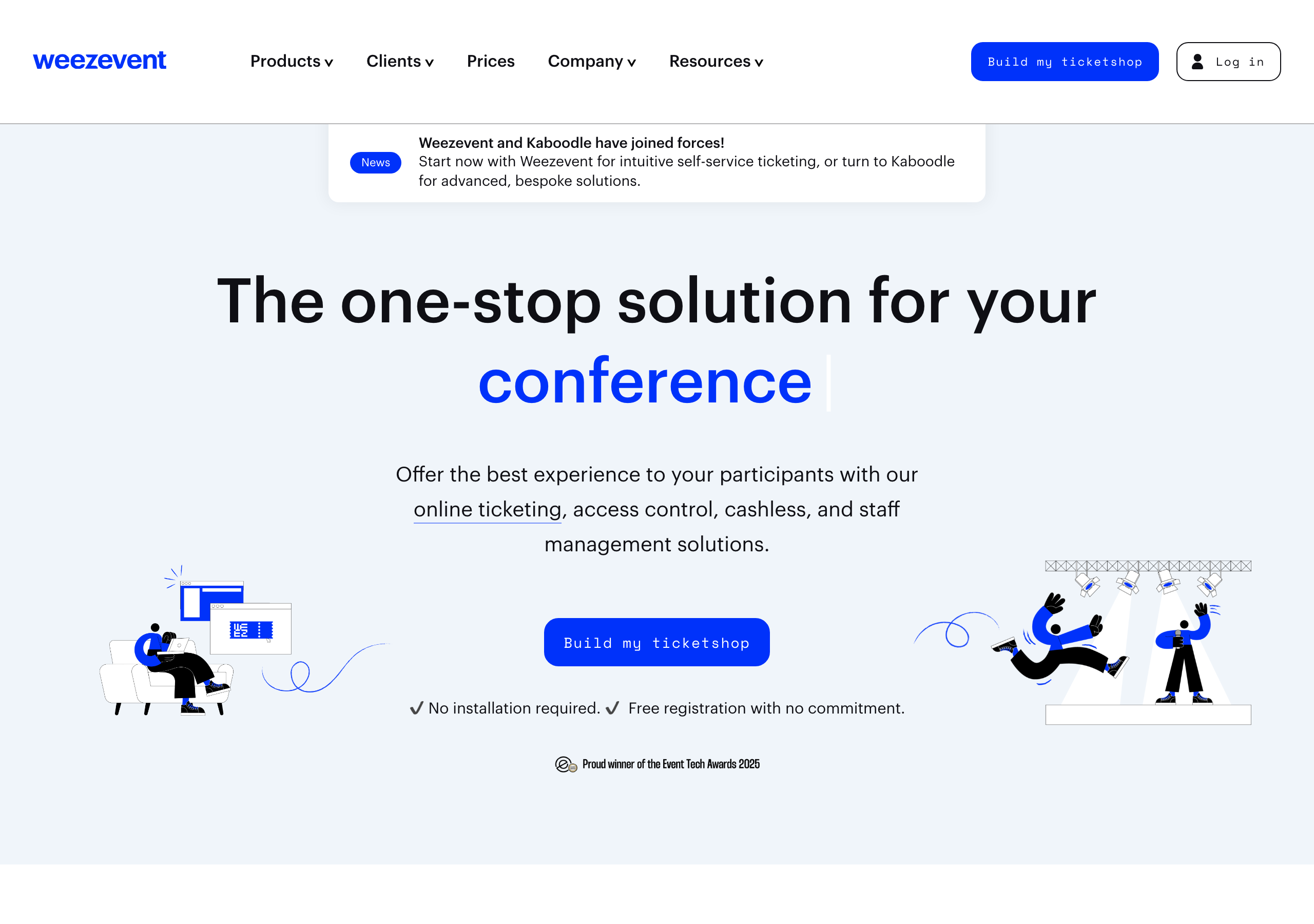
  • Weezevent
  • See Tickets
  • Zeffy
  • Universe
  • Posh
  • SimpleTix
  • RSVPify
  • TicketSource
  • Humanitix
  • Ticket Tailor
  • TicketSpice
  • TicketLeap
  • Luma
  • Weezevent
  • See Tickets
  • Zeffy
  • Universe
  • Posh
  • SimpleTix
  • RSVPify
  • TicketSource
  • Humanitix

Eventbrite alternatives

Compare every major ticketing platform on fees, features, and real user reviews, in one place.

Best Eventbrite alternatives in 2026

Discover the best alternative ticketing platforms to Eventbrite in 2026. Here's a brief overview of features, pricing and reviews.

Ticket Tailor

Affordable, flat-fee ticketing platform with a strong reputation for fair pricing and white-label customisation, popular with independent organisers worldwide.

Reviews

4.8
1,712 reviews

Average across Trustpilot, Capterra & Google.

  • Trustpilot
    4.7(723)
  • Capterra
    4.9(495)
  • Google
    4.7(494)

Top features

  • Flat per-ticket fee (no % cut)
  • Direct Stripe / PayPal / Square payouts
  • Reserved seating chart designer
  • Embeddable checkout for any site
  • Free check-in app

Pricing from

From $0.30 / ticket

TicketSpice

US-focused platform with a powerful drag-and-drop page builder and strong on-site operations, including cashless RFID/wristband payments at festivals.

Reviews

3.8
111 reviews

Average across Trustpilot, Capterra & Google.

  • Trustpilot
    2.9(7)
  • Capterra
    4.8(104)
  • Google
    No reviews

Top features

  • Drag-and-drop event page builder
  • Conditional logic & dynamic pricing
  • Mobile box office (cash + card)
  • Cashless wristband / Mobile Pay Pass
  • Built-in fraud-detection scanning app

Pricing from

From $0.49 / ticket

TicketLeap

Long-running US ticketing platform aimed at small-to-mid theatres, schools and festivals, known for its mobile-friendly reserved seating builder.

Reviews

3.5
52 reviews

Average across Trustpilot, Capterra & Google.

  • Trustpilot
    3.6(3)
  • Capterra
    4.6(43)
  • Google
    2.3(6)

Top features

  • "Focal Point" reserved seating builder
  • Held seats for VIPs & accessibility
  • Embeddable Buy Tickets widget
  • iOS / Android scanning app
  • Fee pass-through (free for organisers)

Pricing from

From $0.49 / ticket

Why switch

Why consider Eventbrite alternatives?

Eventbrite is the default, but rarely the best fit. Here's what organisers gain by moving to a platform built for their event.

Lower fees

Most alternatives charge a fraction of Eventbrite's per-ticket cut. Keep more of the revenue you've earned, especially at scale.

Specialised features

Find a platform built for your exact event type (festivals, theatres, communities, nonprofits, conferences) instead of a one-size-fits-all tool.

Better customisation

Take real control of branding, checkout flow and your attendee data. Many alternatives offer white-label pages, custom domains and direct payouts.

Skip the marketplace tax

Eventbrite's percentage fee partly subsidises its discovery marketplace, but research suggests only around 2% of ticket sales actually come from that channel. Most organisers drive their own audience, so they're paying for distribution they aren't using.

Side by side

Compare top Eventbrite alternatives

See how the leading ticketing platforms stack up against each other in the areas that matter most.

PlatformRatingBranded event pagesHost on your own websiteCheck-in appEmail marketing24/7 supportDirect payoutsDetails
Ticket Tailor
4.8/5
View →
TicketSpice
3.8/5
View →
TicketLeap
3.5/5
View →
Luma
No reviews
View →
Weezevent
4.7/5
View →
See Tickets
4.0/5
View →
Zeffy
4.6/5
View →
Universe
3.3/5
View →
Posh
2.1/5
View →
SimpleTix
4.2/5
View →
RSVPify
3.8/5
View →
TicketSource
4.8/5
View →
Humanitix
4.8/5
View →

Data is sourced from publicly accessible information and is subject to change. Verify with the platform before making a decision.

About Eventbrite

From 2006 startup to Bending Spoons subsidiary

Eventbrite has been the default self-service ticketing platform for two decades. Twenty years of product, pricing and ownership decisions have brought it to where it is now: privately held, restructuring, and competing in a market that finally has serious alternatives.

  1. 2006

    Founded in San Francisco

    Kevin Hartz, Julia Hartz and Renaud Visage launch Eventbrite as a self-service ticketing tool for independent organisers. The pitch is simple: cheaper, faster event setup than the incumbents.

  2. 2014

    Crosses $1 billion in gross ticket value

    Eventbrite becomes the de facto choice for independent organisers worldwide, riding the tailwind of social-event culture and a fast-growing creator economy.

  3. September 2018

    IPO at a $1.76 billion valuation

    Eventbrite lists on the NYSE at $23 a share. It is the high-water mark for the company. The story from here is about a public-market business under pressure to grow margins.

  4. 2020

    COVID-19 wipes out live events

    Revenue collapses overnight. Eventbrite cuts roughly 45% of its global workforce. The company survives but emerges with a different cost structure and a tighter grip on per-ticket monetisation.

  5. 2023

    Subscription tiers introduced (then reversed)

    Eventbrite rolls out Flex, Pro and Premium subscription plans for organisers. The move is poorly received. By late 2024 the company has reinstated unlimited free event publishing and quietly scrapped the multi-tier subscription model.

  6. December 2025

    Bending Spoons announces $500m acquisition

    Milan-based Bending Spoons, owner of Evernote, Meetup, WeTransfer, Komoot and Vimeo, agrees to take Eventbrite private at $4.50 per share. The price is well below the IPO valuation and reflects years of flat revenue.

  7. 10 March 2026

    Deal closes. Eventbrite delists

    Eventbrite becomes a wholly-owned subsidiary of Bending Spoons. Shareholders receive their $4.50; the NYSE delists the stock. The public-market pressure that loosely disciplined organiser pricing for seven years is now gone. Read our full breakdown.

  8. 2026 onwards

    Why organisers are reading the small print

    Bending Spoons has a documented pattern across its portfolio: significant workforce cuts within months of acquisition, free tiers tightened, paid tiers raised. Meetup organiser fees roughly doubled within twelve months of its 2024 acquisition. The general manager who ran that Meetup playbook has now been appointed to run Eventbrite. None of this proves Eventbrite organisers will face fee increases, but the question is live enough that knowing your alternatives is suddenly more useful than it was a year ago.

Now is the best time there's ever been to look for an Eventbrite alternative.

FAQ

Frequently asked questions

The questions organisers ask most often about Eventbrite, its fees, and switching to an alternative.

  • Why do people switch from Eventbrite?

    Most organisers cite three reasons: high per-ticket fees that eat into revenue, limited control over branding and the attendee experience, and competing events being shown next to their listing on the Eventbrite marketplace. Many find an alternative that better matches their event type (festivals, theatres, communities, nonprofits), keeps more of the revenue and gives full control of branding and attendee data.
  • What are the most popular Eventbrite alternatives?

    The most-used alternatives today include Ticket Tailor (flat per-ticket fees, white-label checkout), Humanitix (donates profits to charity), TicketSource (strong fit for UK arts and theatres), TicketSpice (US-focused with cashless RFID), Luma (community and tech events), Weezevent (European festivals), and Zeffy (free for US/Canadian nonprofits). The best one depends on the type of event you run.
  • How much does Eventbrite cost?

    Eventbrite has a single pricing plan with no monthly subscription. Organisers pay 3.7% + $1.79 per paid ticket as a service fee (US), plus a 2.9% payment-processing fee per order. UK organisers pay 3.7% + £0.59 per paid ticket plus 2.9% processing. Free events incur no fees at all.
  • What are Eventbrite's fees?

    Eventbrite charges 3.7% + $1.79 per paid ticket (US) or 3.7% + £0.59 per paid ticket (UK) as its service fee, plus 2.9% payment processing per order. There's no monthly subscription. Free events have no fees. Organisers can either absorb the fees or pass them on to the buyer at checkout.
  • Does it cost to leave Eventbrite?

    No. Eventbrite does not charge a cancellation or exit fee, and you can move away at any time. The main effort is migrating existing event data (attendee lists, past event pages and ticket types) over to your new platform. Several alternatives offer a free Eventbrite import tool that does this automatically in a few minutes.
  • Do I need a marketplace to advertise my event?

    Usually no. For most organisers, the bulk of ticket sales come from their own channels (email, social media, direct website traffic and paid ads) rather than from a ticketing platform's discovery marketplace. Marketplaces can deliver some incremental traffic but the trade-off is higher fees and your event being shown alongside competitors. A low-fee platform combined with your own marketing is typically more cost-effective.